
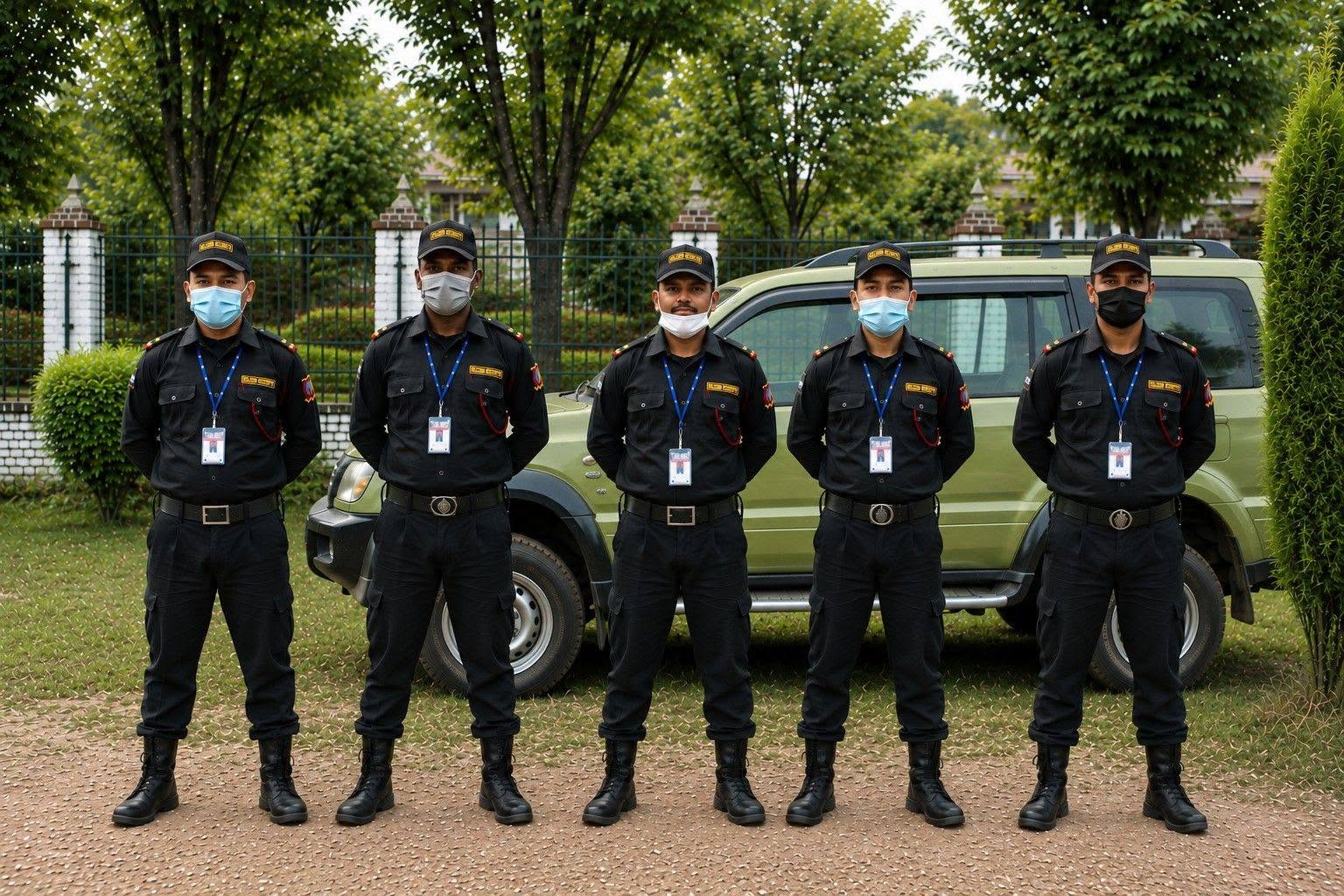
When an earthquake strikes, the first minutes matter. Learn what trained security guards in Nepal do during and after the shaking to keep people safe and calm.
Everyone in Kathmandu knows that earthquakes are not a distant possibility. When the ground shakes, people look for someone who seems to know what to do. In offices, factories, apartments and event venues, that person is often the security guard. A trained guard who stays calm and follows a clear plan can reduce panic, prevent injuries and help emergency services when they arrive.
Before an earthquake: preparation
A good response starts long before any shaking. Guards and building managers should agree on the basics in advance:
- Assembly point: an open area away from buildings, walls, electric poles and wires
- Evacuation routes: stairways and exits kept clear at all times
- Shut-offs: where the gas, main electrical switch and generator controls are
- Emergency kit: torch, first aid kit, whistle, spare radio batteries and a list of emergency numbers
- People who need help: elderly, disabled or sick occupants, and who will assist them
- Visitor register: kept up to date so you know who is inside
Practise the plan with staff or residents from time to time. People who have walked the route once will follow it far more calmly.
During the shaking
While the ground is moving, the priority is to stay safe. Running outside during strong shaking can be dangerous because of falling glass, bricks and objects from buildings.
- Drop, cover and hold on: get down, take cover under sturdy furniture or protect your head and neck, and hold on until the shaking stops
- Stay away from windows, glass, shelves and anything that can fall
- If outside, move away from buildings, walls and power lines
- Guards should call out simple instructions in a loud, calm voice so others follow
The first minutes after the shaking stops
This is when a trained guard’s work really begins.
- Check yourself first. You cannot help others if you are injured.
- Start the evacuation. Guide people calmly down the stairs to the assembly point. Do not use lifts.
- Open the gates. Make sure exits are open and nothing blocks the way out.
- Shut off hazards if it is safe. Turn off gas and main power to reduce fire risk.
- Count people. Use the visitor register and staff or resident lists to find out who is missing.
- Give first aid. Help the injured with basic first aid and CPR where needed, and call for medical help.
- Report. Use the radio or phone to inform the supervisor and, if needed, emergency services.
What not to do
- Do not go back inside a damaged building to collect belongings
- Do not light matches or lighters in case of gas leaks
- Do not spread rumours; share only confirmed information
After the immediate danger
Aftershocks are common, so people should stay in the open until it is safe to return. Guards should keep the gate secure, because empty buildings can be targets for theft after a disaster. They should note visible damage such as cracks, broken pipes or fallen walls and report it, and they should not let anyone back inside until the building has been checked and the authorities’ guidance allows it. Mobile networks may be busy, so radios become very useful for staying in touch.
Emergency-ready guards from Tilicho
Emergency response for accidents, natural disasters and security threats is one of the ten modules in Tilicho Security Service’s guard training, alongside first aid, CPR and fire safety. To place prepared guards at your site, request guards from our Koteshwar office, or learn these skills through our free guard training.